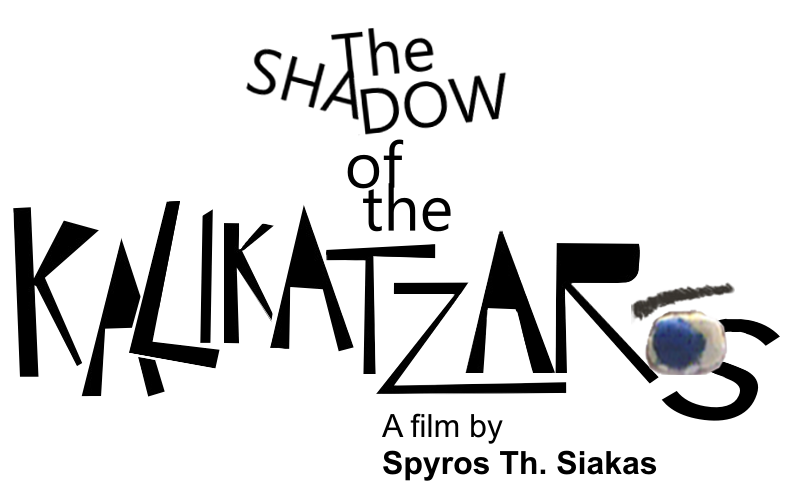
HELP US SHAPE THE FILM POSTER

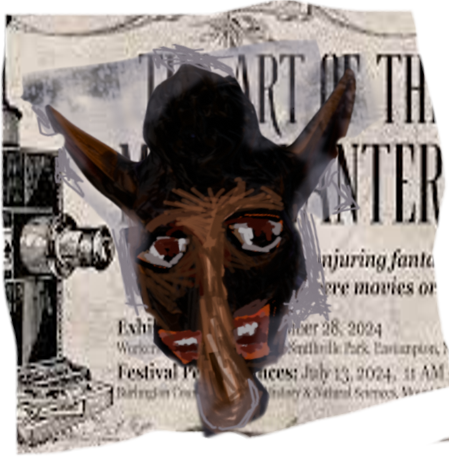
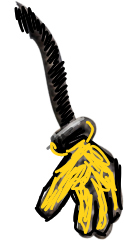
Tap a fragment. Place it inside the poster. Move it. Rotate it. Scale it.
While adults in a remote Greek village stage a kitsch Christmas livestream for their expatriate benefactors based on the myth of the Kallikantzari —the Greek goblins—, a group of students in an ‘offline cave’ bring to life trash-made descendants of the Kallikantzari, raising their own voice.

Embracing a “poetics of error” — where handcrafted imperfection becomes a dramaturgical choice — the film combines traditional animation techniques within a 3D pipeline. Extending beyond the screen through WebAR and participatory digital environments, it proposes storytelling as a living process in which audiences gradually become contributors to an evolving mythology.

YOUR POSTER IS READY

Download your poster and send it to us through the Participate page.
START WITH THE ANIMATED POSTER

Create your first moving fragment of the KALIKATZLAB universe.

Then continue your journey:

KALIKATZ ID CARD
Create your identity.
AR ANIM
Bring your creature to life.
CREATE YOUR WORLD
Build your own XR universe.
ARCHIVE
Discover creations from the community.

CONTINUE YOUR JOURNEY


Bring your Kalikatz to life

in your own space.

Director’s Note

The Shadow of the Kalikatzaros emerged from a question that has accompanied my work for many years: what happens when animation stops being something we merely watch and becomes something we collectively inhabit?

While studying Greek and international folklore, I became fascinated by the Kalikantzari — chaotic, playful creatures appearing across many cultures. Neither entirely destructive nor fully innocent, they carry human weaknesses and fears upon their backs. In this film, they become a metaphor for contemporary youth navigating a reality shaped by digital performance, cultural displacement and inherited narratives.

Artistically, I sought to resist the growing expectation of technological perfection. By combining handmade techniques with three-dimensional environments and deliberately disrupting motion-capture precision, the film embraces what I call a poetics of error — a space where imperfection reveals creative presence, innovation and humanity.

Developed through animation workshops with students and educators, the process itself became collaborative: animation as dialogue and democratic creation.

The film does not end as a closed work. It extends into a broader transmedia process, where characters, narratives and worlds continue to evolve through participation, workshops and shared creative practice.

The Myth Unfolds

The Shadow of the Kalikatzaros is set in a remote Greek village where the memory of the Christmas goblins, the Kallikantzari, survives as an annual ritual livestreamed for expatriate benefactors abroad.

Over time, the celebration drifts away from its origins, transforming into a kitsch spectacle disconnected from the world that once gave birth to the myth.

In response, a group of students begins crafting their own trash-made descendants of the Kallikantzari. Guided by a teacher researching shadow theater and an eccentric grandmother who collects waste as the “new product” of the consumerist era, they reclaim the myth through creation.

Together with the children of the diaspora, they gather in an “offline cave”, transforming discarded materials into a new mythology.

Their creatures embody contemporary anxieties — war, disease, debt, poverty — turning folklore into a living language of collective reflection.

What begins as a local act of resistance gradually opens into something larger.

The story does not remain confined to the village, nor to the film itself. It continues to evolve, carried by those who participate in its creation.